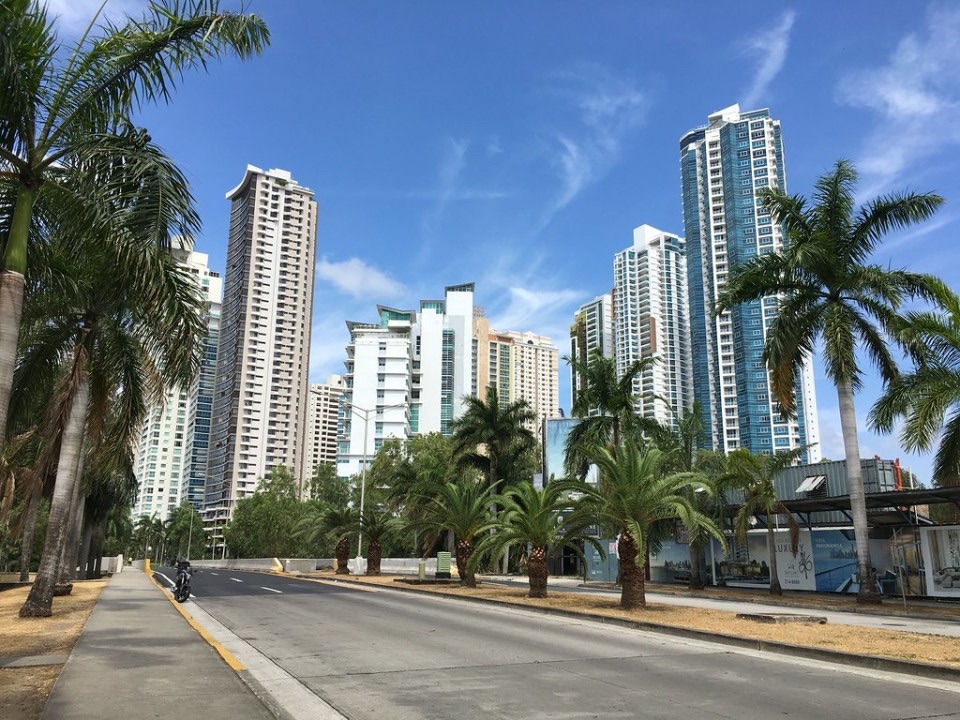
Costa del Este: the crown jewel of Panama City. A neighborhood where sleek skyscrapers meet the Pacific breeze, where luxury condos boast million-dollar views, and where international executives sip artisanal coffee before their next big deal. It’s the Miami of Panama—or at least, that’s what the brochures say.
But beneath the glossy facade, past the manicured lawns and high-end boutiques, lies an undeniable truth: Costa del Este is the shittiest neighborhood in Panama City.
And no, I’m not talking about crime, traffic, or property values. I’m talking about actual, literal dog shit.
The Pile-Up Problem: When the Poop Hits the Pavement
Since the pandemic, pet ownership in Costa del Este has exploded. The lockdowns were long, the apartments were big—and felt even bigger when filled with nothing but the echo of loneliness and boredom. So, what did people do? They adopted dogs. Lots of them.
And at first, it was adorable. Puppies in designer sweaters, Instagram-worthy walks along the oceanfront promenade—it all seemed so wholesome. But as the months passed, a darker reality began to seep in (quite literally) beneath our feet.
Despite having plenty of green spaces, Costa del Este is now drowning in dog waste. The problem isn’t a lack of parks—it’s that the sheer number of dogs has surpassed the capacity of these spaces to absorb the daily deluge of pee and poop. The grass isn’t greener here; it’s just… yellower. And the sidewalks? Well, they’ve become an obstacle course, where dodging dog droppings is a skill you develop out of sheer necessity.
Which begs the question: How many dogs can an urban area actually support? And more importantly, when do “many dogs” become “too many dogs”? Costa del Este may be unintentionally answering that question—one poop at a time.
It’s Not Just the Dogs—It’s Us
Now, let’s be clear: dogs aren’t the problem. They’re just doing what dogs do. The real issue lies at the other end of the leash.
In Costa del Este, pet care is often delegated to maids or nannies. Walking the dog isn’t seen as a responsibility—it’s viewed as an imposition. And this is where things get tricky. Despite some activities can be outsourced, responsibilities cannot. At the end of the day, pet owners are ultimately responsible for their pets, no matter who they pay to care for them.
Which raises another important question: what does it mean to be a pet owner? Is it enough to simply buy or adopt an animal and pay for someone else to take care of it? Does that truly constitute ownership, or is it just a transaction?
When pet ownership is reduced to a chore that can be passed on to someone else, the sense of accountability disappears. And when that happens, it’s not just the pets that suffer—it’s the community.
The Responsible Owners: Fighting a Losing Battle
There are pet owners in Costa del Este who try to do the right thing. They walk with bags in hand, clean up after their dogs, and go out of their way to dispose of waste properly. They’re the ones bending down, doing the work, and making an effort.
But here’s the harsh reality: their efforts feel futile. No matter how responsible they are, the sheer scale of the problem makes it seem like they’re fighting a losing battle. When they see sidewalks still covered in waste and soaked in urine, it’s hard not to feel unmotivated.
It’s demoralizing to know that your effort isn’t shared by others—and even worse, that it’s not making a dent in the bigger issue. Over time, even the most well-meaning owners might start to wonder: “Why bother?”
The Expats’ Dilemma: A Matter of Belonging
Costa del Este is a unique neighborhood. The majority of its residents are expats—people who have moved here from other countries for work or other opportunities. And while this diversity is part of what makes Costa del Este vibrant, it also creates a challenge.
It’s hard not to wonder: would these pet owners behave the same way in their home countries? Probably not. In many countries, fines and regulations ensure that people take pet ownership seriously. But it’s not just about the rules—it’s about the sense of ownership and belonging.
When you live in a place that feels like home, you care about it. You want to keep it clean, safe, and beautiful. But as expats, some residents might feel disenfranchised—a little removed from the community around them. And that lack of connection can make it easier to dismiss responsibilities, like cleaning up after your dog.
So, maybe the real problem isn’t just the waste on the sidewalks—it’s the disconnect between the people who live here and the place they now call home.
Why This Isn’t Just Gross—It’s Dangerous
Beyond the obvious “ew” factor, dog waste is a legitimate public health hazard. It’s not fertilizer; it’s a biohazard filled with bacteria, parasites, and pathogens that can contaminate soil and water. Every time it rains (which it does often), all that waste doesn’t just wash away—it flows into storm drains, polluting local waterways.
Meanwhile, dog urine is slowly killing off the green patches we do have, leaving behind brown, patchy remnants of what used to be lush grass. It’s an environmental nightmare disguised as an inconvenience.
The (Crappy) Attempts at Solutions
Occasionally, you’ll see a faded sign with a cartoon dog cheerfully reminding owners to pick up after their pets. There might even be a lone, overfilled trash bin bravely holding the line against the tide of waste. But let’s be honest—these half-hearted efforts are about as effective as yelling “clean up your act!” into the wind.
No one’s enforcing the rules. No one’s holding pet owners accountable. And so, the problem piles up. Literally.
So, What’s the Solution?
It’s not complicated: pick up after your dog. That’s it. Problem solved.
But since common sense isn’t so common, here are a few ideas:
1. Accountability: Pet owners need to realize that delegating the dog walk doesn’t mean delegating responsibility. If your maid or nanny isn’t picking up after your dog, that’s on YOU.
2. HOA Enforcement: Homeowners’ associations should start issuing fines where it hurts—right in the wallet. A few hefty penalties, and suddenly people remember how to use a poop bag.
3. Better Infrastructure: More waste bins, more bag dispensers, and maybe even designated dog relief areas that get cleaned regularly.
4. Cultural Shift: Picking up dog poop isn’t beneath you. In fact, it’s what separates civilized societies from… well, exactly what Costa del Este is becoming.
The Bottom Line (Pun Intended)
Costa del Este could be the cleanest, greenest, most beautiful neighborhood in Panama City. But until we stop stepping over the problem—literally—it’ll remain the shittiest.
So next time you’re out for a stroll, take a bag. Take some pride. And for the love of all that’s holy, pick up after your damn dog.

 What’s Up With That?
Leave a comment